1. Know your upkeep cycles. Many buildings require tuckpointing maintenance every 50 to 60 years.
2. Match the mortar. New mortar should match as carefully as possible in color, consistency, and elevation. Utilizing too much Portland cement in the mix develops difficult mortars, which can damage old structures.
3. Never grind out joints. Just scrubby mortar should be eliminated. If someone informs you otherwise, run.
4. Never ever utilize sealants. Sealers trap moisture, intensifying problems throughout freeze/thaw cycles.
5. Change in kind. Harmed masonry systems must be replaced whole or by means of Dutchmen of the same material. Spaces filled with putty do not last.
-- Jacob Arndt, Conservation Specialist, Architectural Stone Carver
Radiators
6. Do not throttle a one-pipe steam radiator The steam and condensate have to share that confined https://en.search.wordpress.com/?src=organic&q=Montclair Victorian Restoration area. Keep the valve either fully open or fully near to avoid water hammering and squirting air vents.
7. Develop a best pitch. One-pipe steam radiators must pitch toward the supply valve. Use 2 checkers under radiator feet-- they're the best sizes and shape.
8. Gain control. Thermostatic radiator valves are a terrific method to zone any radiator and conserve fuel. Hot-water and two-pipe steam radiators get them on the supply side; one-pipe steam radiators get them between the radiator and the air vent.
Old radiator.
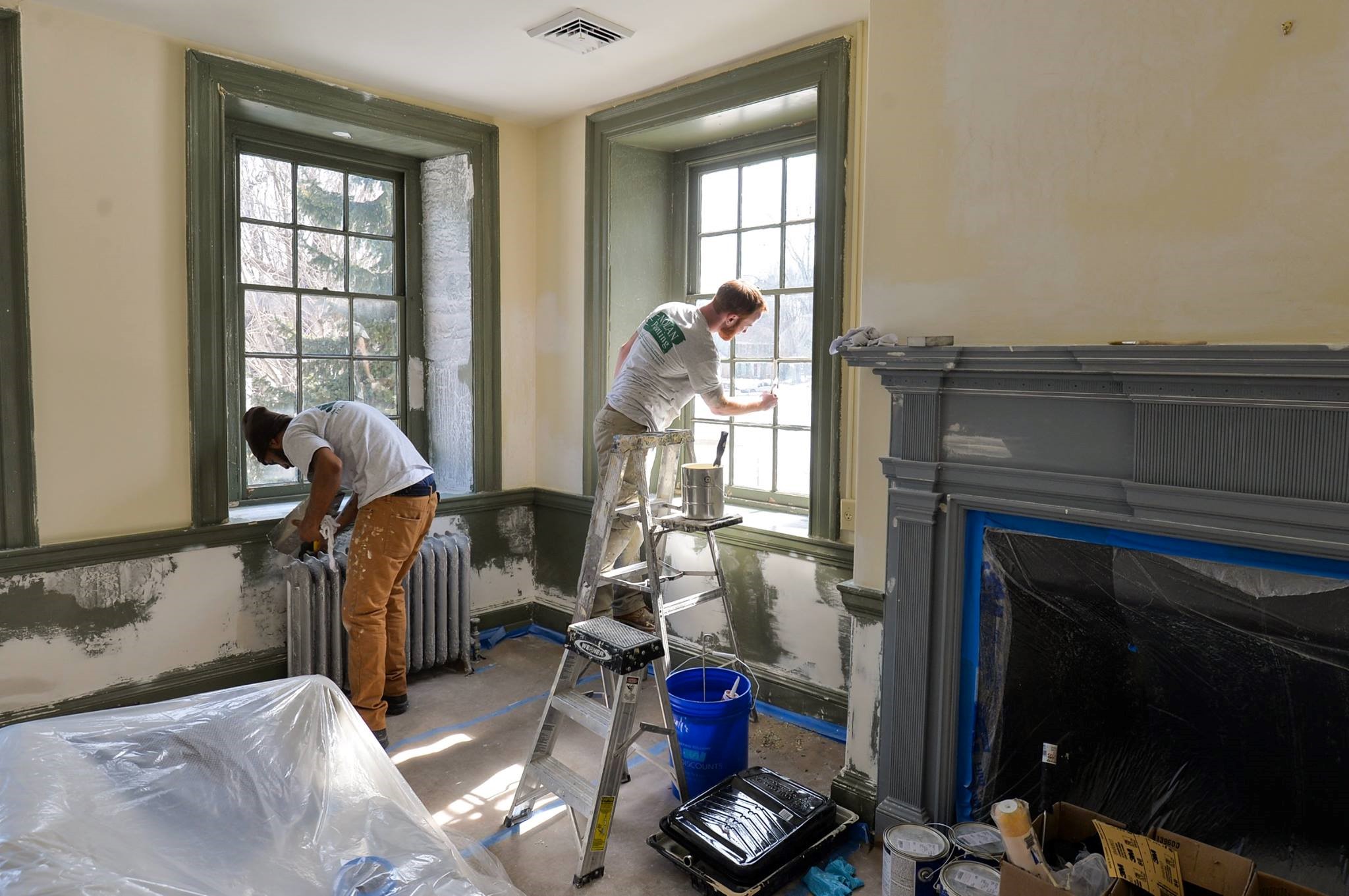
( Image: Sylvia Gashi-Silver).
9. Get a fantastic finish. Pros concur that sandblasting followed by powder coating offers the best, lasting, non-sticky finish-- but do not attempt this at home.
10. Don't stress over fires. Even with steam heat, a radiator gets only about half as hot as the temperature level required to kindle paper, so you can rest simple.
-- Dan Holohan, Author, The Lost Art of Steam Heating.
Woodworking.
11. Usage heartwood. Heartwood is constantly the most disease-resistant. Sapwood of many species must never be used.
12. Rift or quarter-grain cuts are best. These cuts are the most stable. Flat grain typically expands and contracts seasonally at two times the rate of quartered stock.
13. Install plain sawn lumber with the heart side up. Flat lumber will use much better with the heart dealing with up. If there's cupping, the edges will stay flat, and only the center will hump slightly.
14. Find out to use hand tools. Most historic woodwork was produced by hand tools, and many machine-made millwork (late 19th century and after) was installed with them. Historic woodwork surfaces produced with hand aircrafts can't be replicated by contemporary devices like sanders.
15. Use standard joinery. Part repairs ought to be made using traditional joinery rather of non-historic techniques like a wholesale epoxy casting of a missing part.
-- Robert Adam, Creator and Senior Consultant, Preservation Woodworking Department, North Bennet Street School.
Slate Roof, renovating old homes.
Slate roofing on a turret, remodeling old homes.
Slate roof on a turret. (Photo: Nathan Winter).
16. Recognize your slate.To correctly look after your slate roof, discover what kind of slate it is. Simply as you can't fix a Chevy with Ford parts, you should never use New york city red slate on a Pennsylvania gray slate roofing system.
17. Understand your roofing's durability. If your roof just has 100 years of durability victorian house renovation Montclair and is 95 years of ages, it's not worth sinking money into. However a roofing system with 200 years of durability that's 75 years old is a young roof that ought to be extremely valued and correctly maintained.
18. Examine your roofing system regularly. At least when a year, walk around your house (usage field glasses if necessary) and take a look at your roofing. If you see missing out on, broken, or sliding slates, or flashing that looks suspect, call your slater.
19. Search for quality. Good slaters are out there, but you need to look for them. It's worth the effort to have someone who really understands what he's doing.